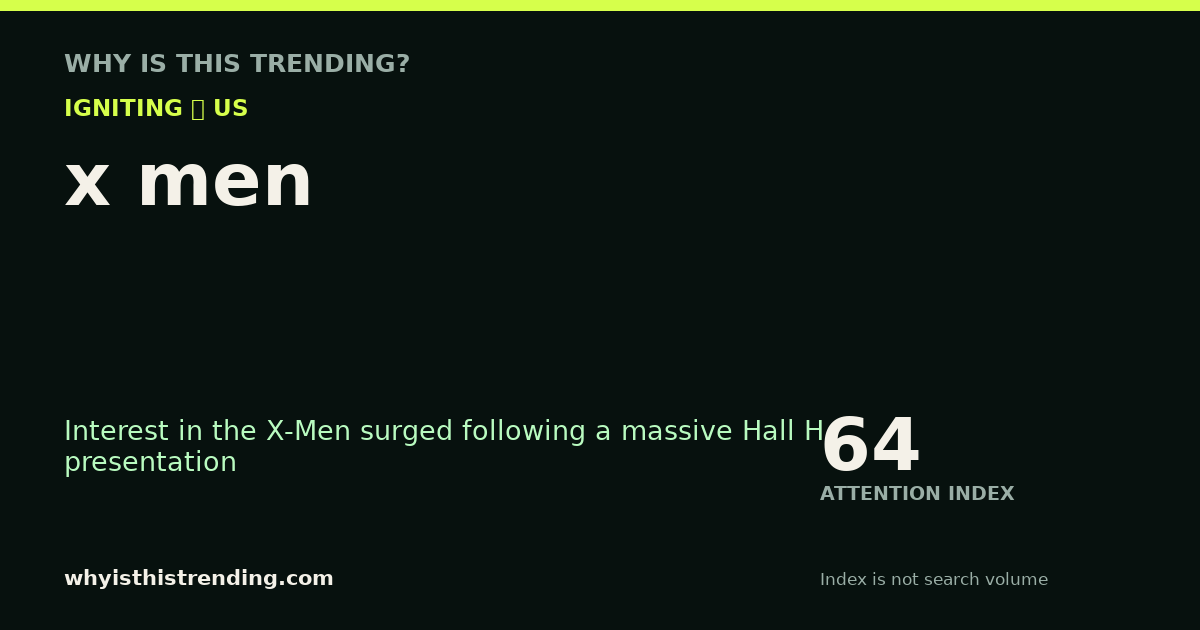
The 20-Year Crossover That Finally Happened
For more than two decades, superhero cinema was carved up by rigid corporate boundaries. When Bryan Singer’s original X-Men hit theaters more than 25 years ago, it laid the structural groundwork for the modern comic-book movie boom, operating entirely under film rights held by 20th Century Fox according to historical industry tracking. Meanwhile, the Marvel Cinematic Universe built its multi-billion-dollar empire separately after kicking off with Iron Man in 2008. That administrative wall finally dissolved when Disney completed its corporate acquisition of Fox's entertainment assets in 2019, returning the mutant rights directly to Marvel Studios bringing the X-Men rights under Marvel's control.
That administrative shift is now bearing fruit on an unprecedented scale. At San Diego Comic-Con, Marvel Studios detonated a pop-culture flashpoint by uniting original cast members James Marsden, Rebecca Romijn, and Kelsey Grammer on stage ahead of their highly anticipated return in Avengers: Doomsday. For actors whose substantial roles in the original mutant trilogy effectively wrapped with 2006's X-Men: The Last Stand, the convention appearance signaled a definitive, full-circle homecoming that has energized both longtime devotees and contemporary franchise followers.
Decoding the Attention Mechanism
For trend analysts tracking the mechanics of this surge, the massive wave of public engagement is driven by a potent intersection of deep-seated nostalgia and hard operational scale. It is not merely that legacy actors are returning for a fleeting cameo; it is the sheer tonnage of intersecting cinematic universes colliding in a single narrative timeline. Robert Downey Jr., stepping into the primary antagonist role as Doctor Doom, admitted that even the film's star-studded ensemble—including MCU veterans like Chris Evans, Pedro Pascal, and Paul Rudd—were left nerding out
upon seeing the classic mutant actors on set noting that their presence lit up a constellation of excitement.
At the same time, individual character trajectories are generating specialized micro-trends across social platforms. James Marsden revealed in exclusive interviews that his return as Scott Summers provides the definitive version of the character fans have demanded for years, complete with comic-accurate 1990s costuming and an expanded, powerhouse action footprint featuring massive optic blasts compared to his sidelined treatment in the original Fox trilogy. Paired with Hall H trailer reveals showcasing the MCU arrival of towering mutant-hunting Sentinels under Doom’s direct command offering a major narrative twist on how the anti-mutant technology is weaponized, the baseline signal is clear: Marvel is leveraging legacy equity to anchor its next multi-film climax.
Signal Versus Noise in the Marvel Machine
When analyzing a sprawling promotional cycle like a Marvel Studios Hall H panel, it is easy to mistake transient fan speculation for structural momentum. To parse what actually matters, consider the following breakdown:
- Signal: The confirmed physical return and active set participation of foundational Fox actors—including Marsden, Romijn, and Grammer, alongside Patrick Stewart and Ian McKellen—proving that the cross-studio crossover is fully operational.
- Signal: The narrative integration of ideological X-Men elements, such as Sentinels, directly into the central conflict against Doctor Doom rather than treating mutants as brief, isolated multiverse easter eggs transforming iconic anti-mutant tech into a tool of the primary villain.
- Noise: Unsubstantiated internet theories and fleeting trailer parsing regarding unconfirmed cameo leaks or hyper-specific plot resolutions beyond what Marvel has formally disclosed in its official panels.
The cultural footprint of this announcement underscores a broader truth about modern franchise maintenance: audiences respond powerfully when long-separated cinematic universes finally bridge their continuity gaps. As the industry looks toward the scheduled theatrical release of Avengers: Doomsday, the reunion of the original X-Men cast proves that intellectual property anchors possess immense staying power when treated with a genuine sense of historic scale.