The Catalyst: A Statistical Outburst
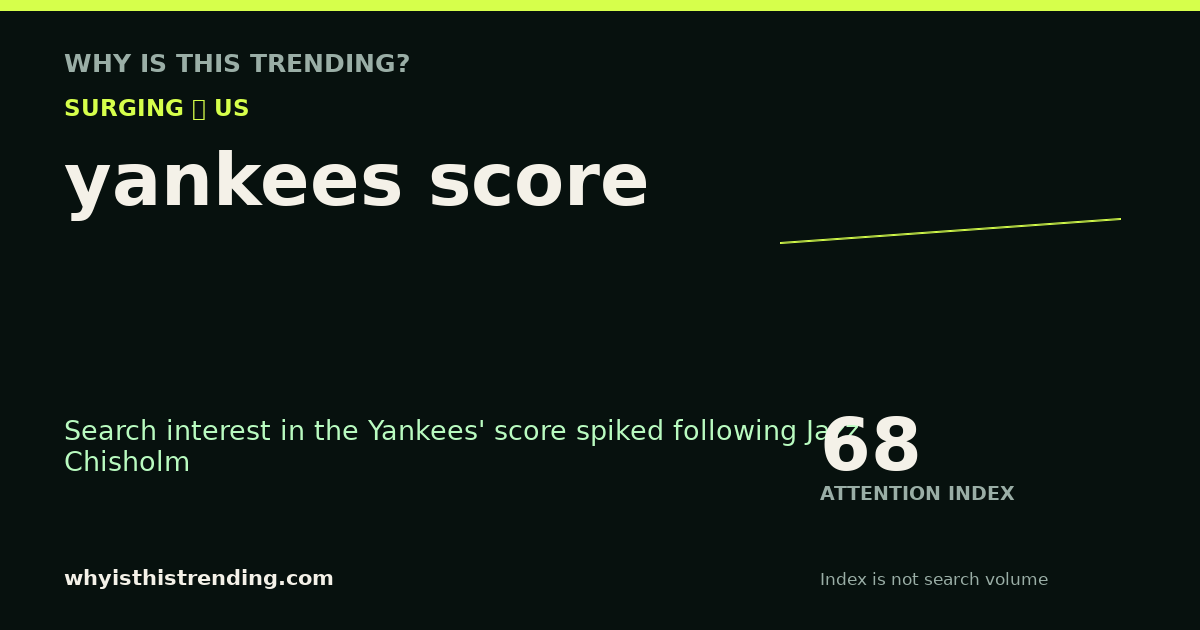
The recent surge in search interest for "yankees score" is a direct response to a high-impact performance. On July 20, 2026, New York Yankees second baseman Jazz Chisholm Jr. delivered a masterclass in power hitting, launching two home runs and driving in five runs to secure an 8-5 victory over the Pittsburgh Pirates as reported by AP News. For fans and casual observers alike, such a performance acts as a gravitational pull, driving immediate digital traffic to check the final score and verify the details of the game.
This was not an isolated incident of success for Chisholm. His performance against the Pirates followed a clutch tiebreaking home run in the eighth inning of a 2-1 win against the Los Angeles Dodgers during the second game of a doubleheader on July 19, 2026 as reported by AP News. By hitting home runs in three consecutive plate appearances—spanning from the Sunday night finale against the Dodgers to the Monday night opener against the Pirates—Chisholm became the primary narrative of the weekend’s baseball coverage.
Beyond the Box Score: Why the Interest Is Sustained
While Chisholm’s individual brilliance provided the spark, the broader context of the game helped sustain the momentum. The matchup against the Pirates was not a quiet affair. In the eighth inning, the game saw the benches and bullpens clear following a heated exchange between Yankees infielder José Caballero and Pirates reliever Dennis Santana according to coverage from Vindy.com. Moments of tension, especially when paired with a high-scoring, back-and-forth contest, naturally increase the likelihood that fans will turn to search engines to understand the full story behind the final score.
The game’s trajectory also contributed to the "must-watch" nature of the result. The Yankees initially jumped out to a four-run lead in the first inning, only to see the Pirates rally to take a 5-4 lead by the third. Chisholm’s second home run of the night reclaimed the lead for New York, effectively serving as the game-winning hit. This volatility—a lead lost and then regained—is a classic driver of search volume, as fans who may have checked the score early in the evening returned to see how the game concluded.
Signal vs. Noise: Interpreting the Trend
In the landscape of sports trends, it is essential to distinguish between a fleeting interest spike and a sustained shift in attention. The "yankees score" trend is a performance-driven signal. It is not merely a reflection of the team's standing, but a specific reaction to an individual player’s hot streak.
- The Signal: Jazz Chisholm Jr.’s 10th career multi-homer game and his recent consistency at the plate.
- The Context: A competitive, high-scoring game against a rising Pirates team that included a bench-clearing incident, ensuring the game remained a topic of conversation well after the final out.
- The Noise: Standard daily search volume for a major-market team like the Yankees is always present; the current spike represents a significant deviation from that baseline, specifically tied to the July 20th event.
When analyzing these trends, we see that fans are increasingly looking for more than just a number. They are seeking the narrative—the "how" and "why" behind the score. Whether it is a player hitting home runs in three straight at-bats or a tense late-inning conflict, the search intent is driven by the desire to contextualize the box score within the larger drama of the MLB season.
Looking Ahead
As the Yankees move forward, the attention mechanism is likely to shift based on the health of their rotation and the consistency of their lineup. With the team operating with a thin starting staff and awaiting the return of key pitchers like Max Fried and Carlos Rodon, the pressure on the offense to provide run support—as they did in this 8-5 victory—will remain high. Readers should check a current forecast closer to any upcoming games, as weather conditions can impact game-day play and schedule reliability.